Land Clearing That Prevents Future Erosion
Forestry mulching in New Prague for overgrown acreage and vegetation management
Back 40 Dirt and Timber provides forestry mulching across New Prague and surrounding Rice County properties where overgrown vegetation limits land use and access. You need this service when brush, saplings, and undergrowth have taken over acreage to the point where mowing equipment can't handle the density, or when you're preparing land for agricultural use, pasture expansion, or building sites. The mulched material stays on-site as ground cover rather than requiring hauling and disposal.
The mulching process grinds vegetation into small chips that decompose into the soil, creating a protective layer that holds moisture and prevents erosion on slopes and disturbed ground. Spring thaw and mud season in southern Minnesota make timing critical—accessing overgrown acreage too early in the season creates deep ruts that damage the land, while waiting too long pushes work into the wettest months when equipment can't operate without causing compaction problems.
Schedule a site evaluation to determine the best access timing based on current ground conditions.
What Happens After Vegetation Is Mulched
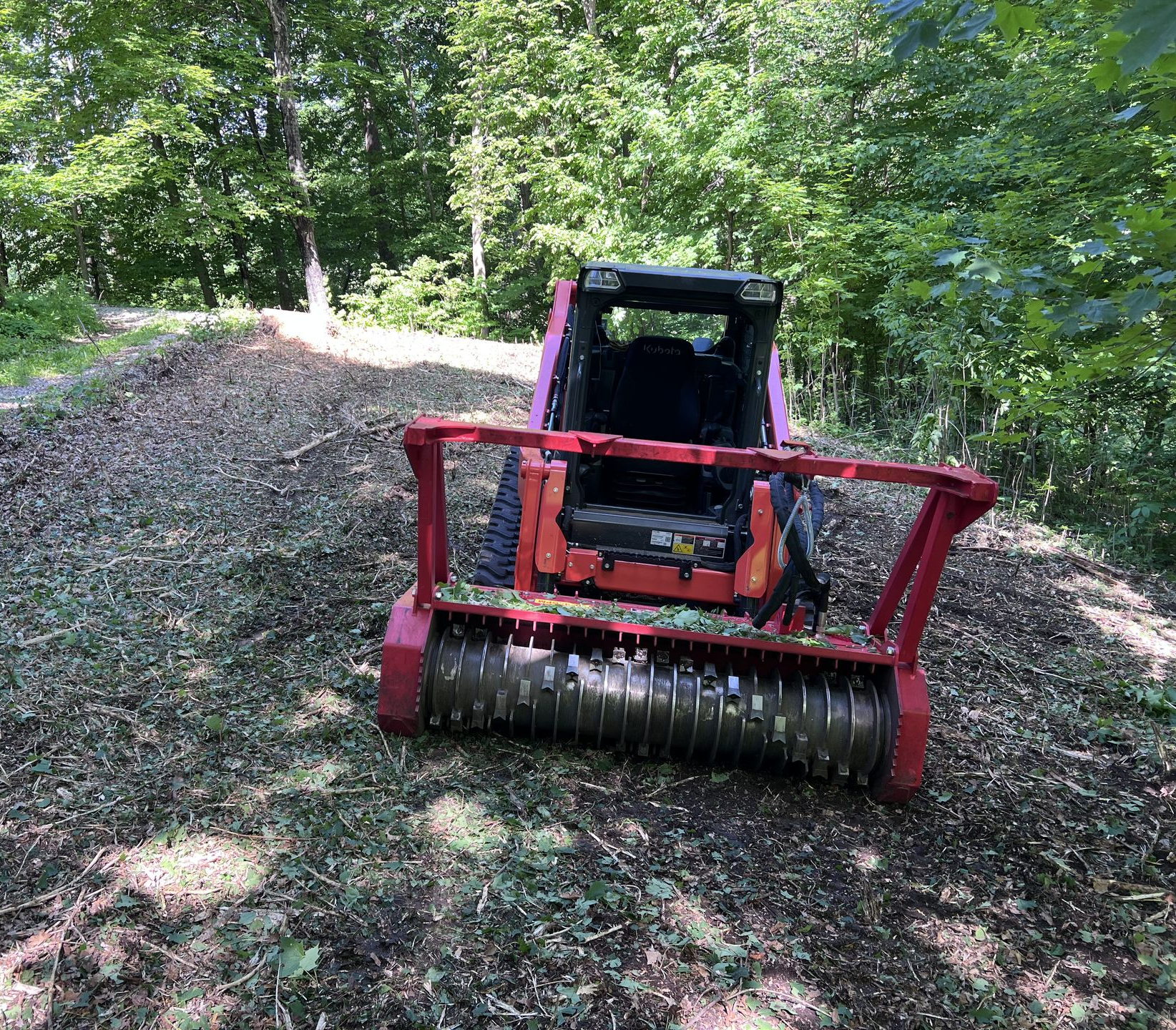
The mulching attachment grinds everything from small saplings to dense brush into uniform chips that spread across the cleared area. The depth of the mulch layer depends on vegetation density, but it typically creates two to four inches of coverage that blocks sunlight from reaching the soil surface. This layer suppresses regrowth of many weed species while allowing desirable grasses and ground cover to establish over the following growing season.
After the work is complete, you'll notice cleared sight lines, accessible acreage, and ground that's stable enough to walk or drive across without the equipment getting tangled in vines or saplings. The mulched surface handles rainfall better than bare soil because the organic material absorbs water and slows runoff, which matters on sloped properties where erosion typically starts after vegetation is removed. Back 40 Dirt and Timber approaches each site with attention to drainage patterns and access routes that minimize ground disturbance while clearing the necessary area.
The service includes mulching of standing vegetation, but it doesn't remove stumps below ground level or address large trees that exceed the capacity of the mulching head. Properties with heavy clay soils may require additional drainage work if the land has been compacted by years of unchecked brush growth, and steep slopes sometimes need follow-up seeding to establish permanent ground cover before the next heavy rain.
Questions About Land Clearing Work
Property owners preparing overgrown acreage often ask about timing, access requirements, and what the land will look like after mulching is complete.
What size vegetation can forestry mulching handle?
The mulching head processes brush, saplings, and small trees up to six inches in diameter, which covers most overgrown vegetation on rural properties but not mature hardwoods or large stumps that require different equipment.
How does spring thaw affect scheduling in Rice County?
Ground conditions during March and April determine whether equipment can access your property without creating ruts—frozen ground supports heavy machinery, but once thaw begins and frost leaves the soil, you're waiting until the ground firms up or risk damaging the land with deep tracks.
What prevents erosion after clearing?
The mulch layer itself acts as erosion control by covering exposed soil, slowing water movement, and adding organic matter that helps rainfall absorb into the ground rather than running off and carrying topsoil with it.
How long does mulched material take to break down?
Decomposition depends on climate and mulch depth, but in southern Minnesota conditions, the chips typically break down enough to blend into the soil within one to two growing seasons as moisture and freeze-thaw cycles accelerate the process.
What's included in a cost estimate?
Estimates account for acreage size, vegetation density, access difficulty, and ground conditions that affect how long the work takes—dense brush with difficult access costs more per acre than light vegetation on flat, easily accessible land.
Back 40 Dirt and Timber is fully insured and provides free estimates for properties across Rice County. Request a site visit to assess your specific acreage and discuss access timing based on seasonal ground conditions.